

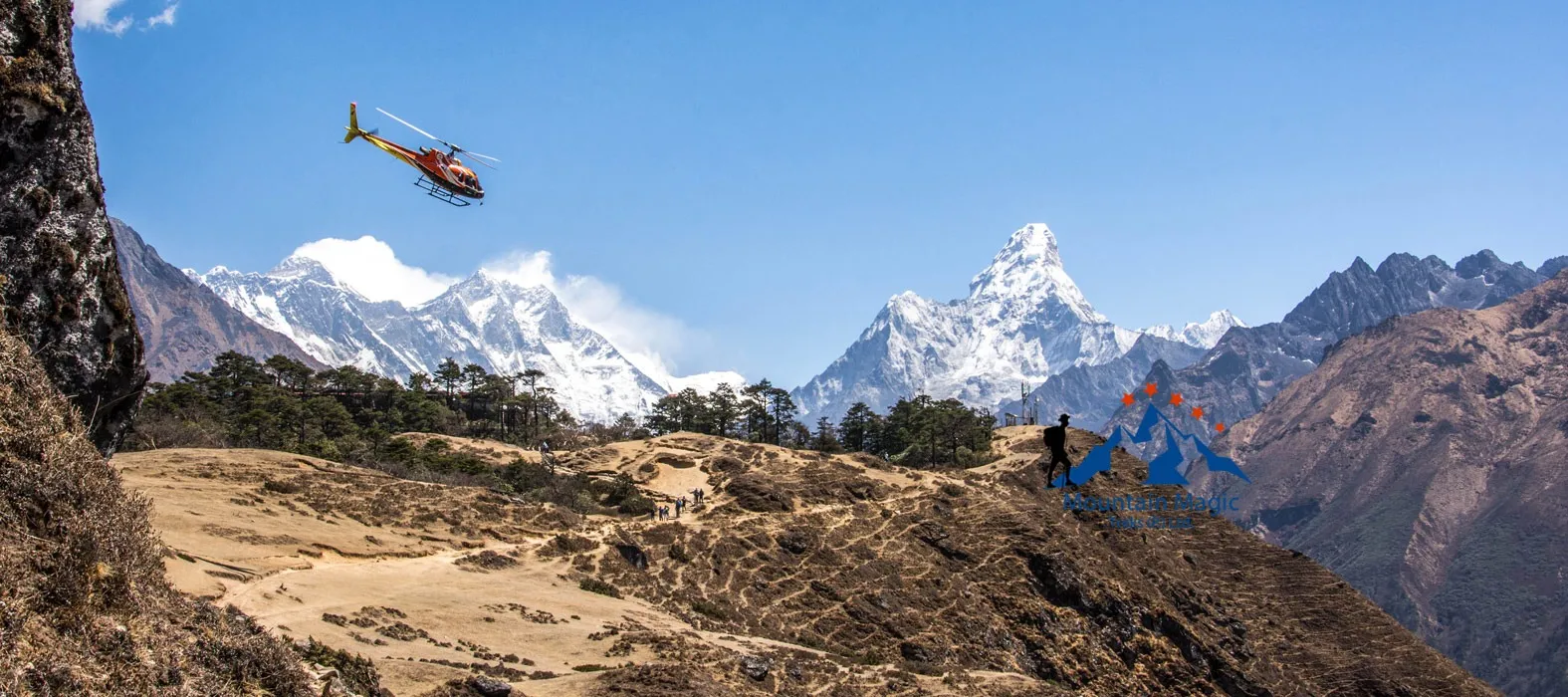
Everest is more than a mountain on a map. For many travelers, reaching its base means spending days walking through a landscape that becomes more dramatic with every step.
The Everest Base Camp Trek With Helicopter Return offers a different way to experience this adventure. You travel through the Khumbu on foot, pass mountain villages, reach Everest Base Camp and Kala Patthar, and then return by helicopter.
The trip is not about rushing toward the destination. It is about noticing how the landscape, culture, and daily experience change as you climb higher.
The Adventure Begins in the Lower Khumbu
The first part of the trek feels very different from the high mountain sections.
After reaching Lukla, the trail leads toward Phakding through green hills and small settlements.
Enjoy the Easier Start
The lower trail gives your body time to settle into trekking.
You will walk beside rivers, cross suspension bridges, and pass stone-built homes.
Do not worry about reaching the next stop quickly.
Use these first days to find a comfortable walking rhythm and make sure your footwear feels good.
Namche Is a Major Turning Point
The journey from Phakding toward Namche Bazaar includes a long climb.
The trail becomes busier, and the surrounding mountains begin to feel much closer.
Give Your Body Time
Namche is an important acclimatization stop.
Instead of treating the rest day as wasted time, use it properly.
Walk around the village, enjoy the views, and take a short hike if your guide recommends one.
Your body needs time to adjust before you continue toward higher elevations.
Discover the People Behind the Landscape
The Everest region is home to communities with a strong connection to the mountains.
Villages along the trail are not simply tourist stops.
Look Beyond the Mountain Views
Notice the prayer flags, stone walls, monasteries, local shops, and homes.
Tengboche is especially important for its Buddhist monastery and peaceful mountain setting.
If you visit religious sites, behave respectfully.
Ask before taking close photographs of people or ceremonies.
Small acts of respect can make your experience more meaningful.
The Trail Gets More Serious at Dingboche
Dingboche sits at a much higher elevation than Namche.
By this point, the thinner air may become noticeable.
Walking uphill can feel harder than expected.
Slow Down Before You Need To
There is no advantage in exhausting yourself early.
Walk at a pace you can maintain.
Take short breaks.
Drink water regularly.
Eat enough food, even if your appetite changes.
The itinerary includes an acclimatization day at Dingboche, giving you time to prepare for the higher sections.
Watch the Landscape Lose Its Green
After Dingboche, the scenery changes again.
Trees become less common, and rocky slopes, glaciers, and high peaks take over.
Notice How Quickly Nature Changes
At the start of the trek, you may be surrounded by forests.
A few days later, the landscape can look almost bare.
This change is one of the most interesting parts of the journey.
You are not simply walking toward Everest.
You are moving through several different mountain environments.
Lobuche Brings a Quiet Feeling
Lobuche is one of the final major stops before Gorakshep.
The surroundings are rugged, cold, and exposed.
The nearby Thukla area also contains memorials for climbers who lost their lives in the Everest region.
Take a Moment to Reflect
These memorials are a reminder that high mountains deserve respect.
Everest can look peaceful from a distance, but the environment can be challenging.
Take your time around the memorials and continue with a thoughtful attitude.
Prepare for Gorakshep
Gorakshep sits at roughly 5,125 meters.
At this elevation, even ordinary walking can feel tiring.
Keep Your Bag Light
For the Base Camp section, avoid carrying things you do not need.
Your small daypack can include:
-
Water
-
Snacks
-
Warm clothing
-
Sunglasses
-
Sunscreen
-
Camera
-
Personal essentials
A lighter pack can make a noticeable difference during a long day.
The Walk to Everest Base Camp
The route from Gorakshep to Everest Base Camp is one of the major highlights.
The listed elevation of Base Camp is around 5,364 meters.
The trail leads through a rocky landscape with views of glaciers and surrounding peaks.
Do Not Race to the Finish
You may feel excited when Base Camp gets closer.
That excitement can make you walk faster than you should.
Stay steady.
Take breaks when needed.
Remember that you still have to return to Gorakshep after reaching Base Camp.
Make Your Arrival Meaningful
Reaching Base Camp is a moment worth enjoying.
You have spent several days moving deeper into the Himalayas.
Put the Camera Down for a Minute
Take your photographs.
Then stop and look around.
The Khumbu Icefall and nearby mountains create a landscape that is difficult to understand from a screen.
Think about where you started.
The green valleys near Lukla may feel like another world now.
Kala Patthar Adds a New Perspective
The journey does not end at Base Camp.
Kala Patthar reaches approximately 5,545 meters and is the highest point listed in the itinerary.
Sunrise Changes the Mountains
The early climb can be cold, but the morning light creates beautiful views of Everest and nearby peaks.
The mountains change color as the sun rises.
Take your time at the viewpoint.
You have already made the effort to reach this height, so enjoy the view rather than immediately thinking about the next step.
The Helicopter Changes the Way You See the Khumbu
After completing the main trekking section, the helicopter return provides a completely different experience.
The Everest Base Camp Trek With Helicopter Return allows you to see the landscape from above after spending days exploring it on foot.
Recognize the Places You Walked Through
From the air, trails look tiny.
Villages appear small.
Valleys that seemed enormous from the ground suddenly fit into one view.
You may recognize areas you passed earlier in the journey.
This makes the flight more than a simple return trip.
It becomes a final look at the route you worked hard to complete.
Weather Requires Flexibility
Mountain flights depend on safe weather conditions.
Clouds, wind, and poor visibility can affect helicopter operations.
Leave Extra Time in Your Schedule
Do not plan an important international flight with almost no gap after the expected helicopter arrival.
Give yourself some breathing room.
A flexible schedule is especially important when traveling in the mountains.
Take the Journey One Day at a Time
The Everest Base Camp Trek With Helicopter Return may have a clear destination, but the best experience comes from focusing on each day.
One day may be about crossing bridges.
Another may be about acclimatization.
Later, it may be about walking through a rocky high-altitude valley.
Then comes Base Camp, Kala Patthar, and finally the helicopter flight.
Each part adds something different.
The View You Take Home
The strongest memory may not be the photograph you expected to take.
It could be the sound of a river below a suspension bridge.
It could be a quiet morning in Dingboche.
It could be seeing Everest for the first time.
Or it could be looking down from the helicopter and realizing how far you walked.
That is what makes the Everest Base Camp Trek With Helicopter Return different.
You experience the mountains slowly from the ground and then leave them with a wide view from the sky.
The destination matters, but the journey gives it meaning.
FAQs
How long is the listed itinerary?
The listed itinerary is planned for 10 days.
Where are the acclimatization days?
The itinerary includes acclimatization in Namche Bazaar and Dingboche.
How high is Everest Base Camp?
The listed elevation is approximately 5,364 meters.
What is the highest point?
Kala Patthar is approximately 5,545 meters.
Is the trek to Base Camp completed on foot?
Yes. The main trekking route to Base Camp and Kala Patthar is completed on foot before the helicopter return.
Can weather change the helicopter schedule?
Yes. Mountain weather can affect helicopter operations, so travelers should keep some flexibility in their plans.